
Are you trying to choose between selling digital products and physical products and not sure which path fits your goals and lifestyle?
Choosing Between Selling Digital Products and Physical Products
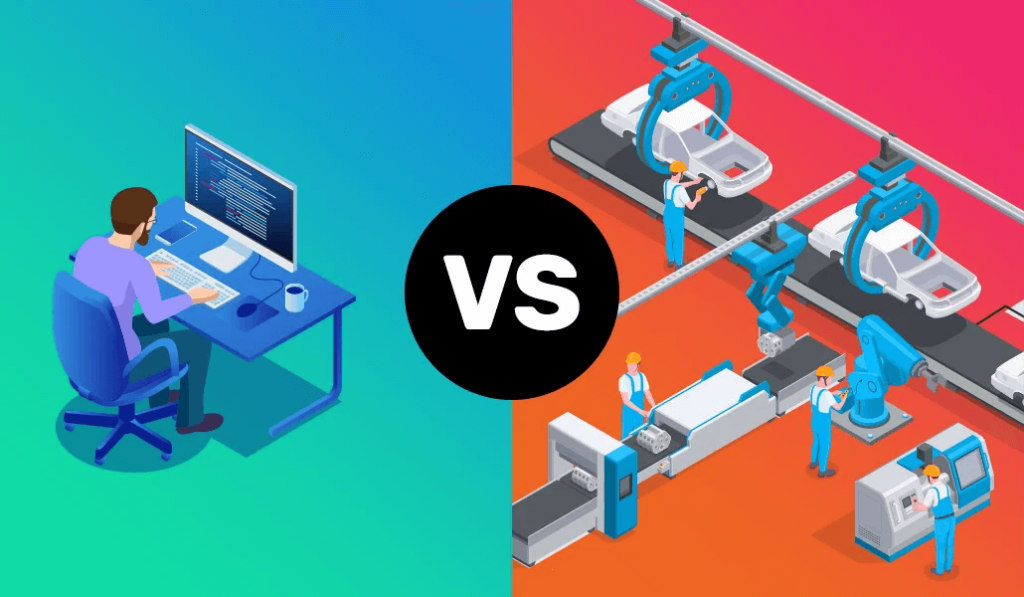
Introduction: Why this decision matters
Choosing the product type you sell shapes nearly every part of your business — from how you create and deliver value to how you market, price, and scale. You’ll find that each option has distinct trade-offs around cost, complexity, customer expectations, and growth potential. This article walks you through those trade-offs in a practical, friendly way so you can make a decision that matches your resources, skills, and ambitions.
Quick overview: digital vs physical at a glance
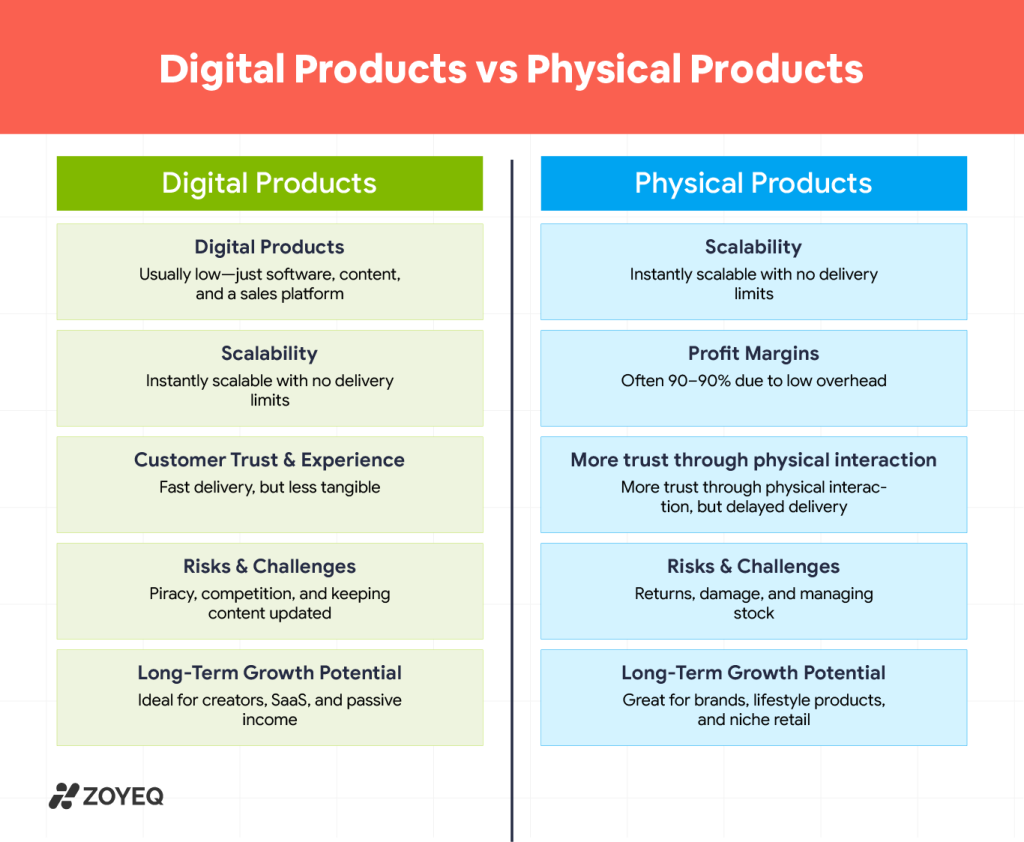
A short snapshot helps you orient your thinking before you go deeper. Digital products are intangible items delivered electronically, while physical products are tangible goods that require manufacturing and shipping. Your choice affects margins, logistics, legal requirements, and the customer experience.
What counts as a digital product?
You likely already use or sell many of these. Digital products include ebooks, online courses, templates, software (including SaaS), digital art, stock media, printables, membership access, and digital downloads. They can be delivered instantly over the internet and often scale without inventory.
What counts as a physical product?
Physical products are anything you can touch and ship. Examples include handmade goods, apparel, electronics, packaged foods, books, and subscription boxes. These require production, inventory, warehousing, and fulfillment.
Core differences in one table
This table highlights the most important contrasts so you can quickly see where the major differences lie.
| Feature | Digital Products | Physical Products |
|---|---|---|
| Delivery | Instant electronic delivery | Shipping and handling required |
| Margins | Potentially high after creation | Often lower due to COGS and logistics |
| Upfront cost | Creation, development | Manufacturing, inventory |
| Scalability | Highly scalable with low incremental cost | Scaling often increases variable costs |
| Returns | Typically easier to control (refund policies) | Returns and exchanges are common |
| Storage | No physical storage | Warehousing or storage needed |
| Fulfillment complexity | Minimal (automation) | Complex (packing, shipping) |
| Legal / compliance | Licenses, IP, data/privacy | Product safety, labeling, import/export |
| Customer expectations | Immediate access, updates | Packaging, delivery time, product fit |
Pros of selling digital products
Selling digital products brings several advantages that appeal to creators and entrepreneurs who value flexibility and scale. You can create once and sell repeatedly with minimal per-sale cost. Delivery is immediate, which consumers appreciate, and you avoid shipping logistics. Updates and iterations are simple to roll out, and global distribution is easier since there’s no customs or shipping barriers for the product itself.
Cons of selling digital products
There are drawbacks to consider. Some markets are saturated, which makes standing out harder. Price sensitivity can be high because consumers expect low overhead. Piracy and unauthorized sharing can erode revenue unless you protect your IP. Also, perceived value for intangible products can be lower unless you invest in branding and high-quality presentation.
Pros of selling physical products
Physical products can create tangible brand relationships and often command higher perceived value. People love receiving packages, unboxing experiences can build loyalty, and certain products are easier to sell because of clear, tangible benefits. You also have options for wholesale, retail partnerships, and physical retail presence.
Cons of selling physical products
Physical products bring higher operational complexity. You need to manage manufacturing, inventory, storage, returns, shipping costs, and possibly customs and import rules. Upfront capital requirements typically increase, and scaling often increases operational challenges proportionally.
Cost breakdown: what you’ll spend upfront and ongoing
Understanding costs helps you plan cash flow and set prices. Below is a simplified comparison of cost categories.
| Cost type | Digital Products (Typical) | Physical Products (Typical) |
|---|---|---|
| Product creation | Development, design, content creation | Tooling, prototyping, raw materials |
| Inventory | None | Manufacturing minimums, stock |
| Storage & fulfillment | Hosting, delivery automation | Warehousing, packing, shipping |
| Transaction fees | Payment processor fees, platform cuts | Same + shipping fees |
| Returns & refunds | Refunds, possible chargebacks | Returns shipping, restocking, disposal |
| Legal & compliance | Licenses, EULA, privacy | Product safety testing, labeling |
| Marketing | Ads, funnels, content | Ads, packaging design, trade shows |
| Ongoing maintenance | Updates, customer support | Manufacturing, QC, restocking |
Pricing strategies for each product type
Price shapes perceived value and profitability. For digital products, consider value-based pricing, subscription models, tiered licenses, or freemium funnels to attract users. For physical products, you’ll often use cost-plus pricing, keystone markup, or psychological pricing while factoring shipping and returns.
Digital pricing tips
You can test pricing quickly and use tiered offers (basic/pro/premium). Offering limited-time discounts and bundling can boost average order value. Subscriptions or recurring billing for access, updates, or membership provides predictable revenue.
Physical pricing tips
Include production cost, shipping, expected returns, and seasonality in your price. Add a buffer for inventory shrinkage and possible tariffs. If you plan wholesale, price for both retail margin and wholesale discount.
Production and product development
How you develop your product will differ substantially depending on whether it’s digital or physical.
Building digital products
You’ll focus on content quality, UX, platform selection, and security. Use prototypes, beta testing, and user feedback to iterate quickly. Tools like content management systems, course platforms, or SaaS frameworks help you deliver polished products without building everything from scratch.
Building physical products
You’ll likely go through ideation, prototyping, supplier sourcing, and production runs. Design for manufacturability, choose materials, and test thoroughly. Supplier relationships and quality control are crucial to avoid returns and brand damage.
Fulfillment and logistics
Fulfillment determines the customer experience for physical products and the delivery speed for digital ones.
Digital fulfillment
Mostly automated: hosting, file delivery, license keys, and access control. You’ll deal with bandwidth, download limits, and perhaps regional restrictions. Automation reduces per-sale workload.
Physical fulfillment
You’ll manage inventory, packing, shipping, tracking, and returns. Consider fulfillment centers, third-party logistics (3PL), or dropshipping to reduce upfront inventory. Each choice changes control, cost, and margins.
Shipping options for physical products
Shipping influences costs and customer satisfaction. You can ship yourself, use regional carriers, partner with 3PLs, or use FBA-style services. Each option has trade-offs in cost, speed, and complexity.
| Shipping option | Pros | Cons |
|---|---|---|
| Self-fulfillment | Full control, personal touch | Time-consuming, scaling limits |
| 3PL / fulfillment centers | Scales well, professional | Fees, less direct control |
| Dropshipping | Low upfront inventory | Lower margins, quality control issues |
| FBA / marketplace fulfillment | Fast shipping, trust | Fees, platform dependence |
Marketing and customer acquisition
Both product types require marketing, but the tactics and lifetime value calculations can differ.
Marketing digital products
Content marketing, webinars, email funnels, affiliates, and paid ads work well. You can use free samples or mini-courses to build trust. Lifetime value tends to be higher if you convert to recurring billing or offer upsells.
Marketing physical products
Product photography, influencer marketing, unboxing videos, retail displays, and experiential marketing are effective. You’ll focus on product discovery and trust signals like reviews and social proof. Wholesale and retail distribution strategies expand reach.
Sales channels and platforms
Choosing the right channel amplifies reach and simplifies operations. Consider direct-to-consumer (D2C), marketplaces, social commerce, subscriptions, or wholesale.
| Channel | Better for digital? | Better for physical? | Notes |
|---|---|---|---|
| Your website | Yes | Yes | Most control over branding and data |
| Etsy / Marketplaces | Some (digital downloads on Etsy) | Yes | Large audience, fees apply |
| Amazon | Limited (digital via Kindle/Apps) | Yes | Massive reach, fees and competition |
| App stores | Yes | No | Good for apps, high approval standards |
| Course platforms (Udemy, Teachable) | Yes | No | Built-in marketplace can help reach learners |
| Wholesale / retail | No | Yes | Requires volume and consistent supply |
| Social platforms (Instagram, Facebook Shop) | Yes | Yes | Good for visual products and impulse buys |
Customer support expectations
Support needs differ and affect staffing and systems.
Support for digital products
You’ll handle technical issues, account access, refunds, and usage help. Support tends to be more knowledge-based and can be handled via knowledge bases, chatbots, and email ticketing.
Support for physical products
Support includes product issues, returns, replacements, shipping inquiries, and warranty claims. You’ll need a clear returns policy, tracking tools, and returns handling processes.
Legal, compliance, and risks
Both models present regulatory obligations, but they differ in nature.
Legal for digital products
You’ll handle intellectual property, licensing, GDPR/privacy compliance, and terms of service. Make sure your refund policy and warranty disclaimers are clear.
Legal for physical products
Product safety testing, labeling, warranty compliance, import/export duties, and consumer protection laws may apply. For certain categories (e.g., cosmetics, electronics, food), strict regulations and certifications are mandatory.
Taxes and accounting
Tax obligations depend on product type and where you sell.
Digital taxes
VAT or sales tax on digital goods varies by country and state. Many regions require sellers to collect and remit taxes for digital downloads and services. You’ll need tools to manage tax collection by location.
Physical taxes
You’ll need to account for sales tax, import duties, customs paperwork, and possibly excise taxes. Inventory accounting and cost of goods sold (COGS) management are important for accurate tax reporting.
Inventory and cash flow management for physical goods
Inventory ties up capital and adds risk. Use demand forecasting, reorder points, and safety stock to avoid stockouts or overstock. Consider consignment or pre-orders to mitigate risk. For seasonal products, manage lead times carefully.
Intellectual property and piracy for digital goods
Protecting your digital work matters if it’s core to revenue. Use licensing, DRM sparingly (often unpopular with customers), watermarking, or legal agreements. Build a strong brand and community to minimize the incentive to pirate.
Returns, refunds, and customer satisfaction
Handling returns well keeps customers coming back and preserves brand reputation.
For digital products
Define refund windows, access revocations, and upgrade policies. Clear product descriptions and previews reduce refund rates. Consider satisfaction guarantees to reduce friction in purchase decisions.
For physical products
Create a transparent return policy, plan for restocking, and set return shipping fees or prepaid labels. Consider refurbishment and resale channels for returned items.
Scalability and business growth
Which model scales faster depends on your product and approach.
Scaling digital products
Scaling is usually easier because additional sales have low incremental cost. Invest in systems for automation, user onboarding, customer success, and content updates. Partner programs and licensing can accelerate growth.
Scaling physical products
Scaling often requires more capital and operational sophistication: larger production runs, international distribution, multiple warehouses, and more staff. However, physical goods can lead to broader B2B opportunities and retail presence.
Hybrid models: combining digital and physical
You don’t have to pick only one. Many successful businesses combine both: physical products bundled with digital courses, digital guides added to merchandise, or physical books sold alongside audiobooks and ebooks. Hybrid models can maximize lifetime value and strengthen customer relationships.
Which model fits different business goals?
Match product type to your aims and constraints.
- If you want low upfront inventory risk and fast iteration: digital products may suit you.
- If you want a tactile brand presence and higher perceived value: physical products may fit better.
- If you desire recurring revenue and predictable cash flow: consider digital subscriptions or a hybrid subscription box + digital content model.
- If you prefer working with suppliers and logistics, and have capital for manufacturing: physical can be rewarding.
Decision framework: questions to ask yourself
Use these questions to clarify which path matches your situation.
- What skills do you have? (content creation, coding, design, manufacturing)
- What is your available capital? (low = digital favored; higher = physical feasible)
- How important is immediate scale? (digital scales faster)
- What customer experience do you want to create? (tangible vs intangible)
- Are you comfortable managing suppliers and logistics? (required for physical)
- How will you protect or monetize IP? (critical for digital)
- What are regulatory constraints for the product category? (check before committing)
- What’s your timeline for revenue? (digital can often generate revenue faster)
Case studies and real-world examples
Real examples make the trade-offs concrete.
Example: An online course creator
You create a comprehensive course and sell it on your website and course platforms. After initial creation, sales increase with email marketing and affiliate partners. Margins grow over time, and you invest in updates and community features for recurring revenue.
Example: A handmade goods seller
You design and craft artisanal products and sell on marketplaces and local stores. You manage inventory, packaging, and shipping. The product’s tangible nature helps justify a premium price and builds loyal customers through unique branding.
Example: Hybrid (fitness brand)
You sell physical workout equipment and pair it with a digital membership for workouts and progress tracking. The combined offer increases AOV and customer retention.
Common mistakes to avoid
Many entrepreneurs fall into similar traps. Avoid these to save time and money.
- Underestimating shipping and returns costs for physical goods.
- Neglecting data privacy and taxes for digital sales.
- Pricing too low and not accounting for all variable costs.
- Launching without product-market fit or adequate testing.
- Overcomplicating fulfillment when you could use a partner.
- Ignoring customer feedback and not iterating on products.
Practical checklist before you launch
Follow this checklist to reduce risk and increase your chance of success.
- Validate demand with pre-orders, landing pages, or an email waitlist.
- Calculate full cost per unit, including shipping, fees, and returns.
- Choose sales channels and test one-to-two channels first.
- Build clear refund and warranty policies.
- Create a basic marketing plan (ads, content, partnerships).
- Set up analytics to track acquisition cost and LTV.
- Plan for customer support and documentation.
- Ensure compliance with relevant laws and taxes.
- Build a contingency plan for supplier or delivery disruptions.
Tools and resources to help you
There are practical tools that make either path easier.
- Digital: Teachable, Gumroad, Stripe, PayPal, Vimeo, GitHub, Zapier
- Physical: Shopify, ShipStation, ShipBob, Alibaba/HKTDC for sourcing, QuickBooks, 3PL providers
- Both: Google Analytics, Klaviyo or Mailchimp for email, Canva for creative assets, Stripe for payments
How to test cheaply before committing
You don’t need a full product to test demand.
- For digital: create a mini-course, lead magnet, or ebook and sell pre-orders.
- For physical: produce a small prototype run, use print-on-demand, or pre-sell with a deadline.
- Use social ads to test messaging and interest with low spend.
- Run a landing page campaign to collect emails and gauge conversion.
Metrics to watch after launch
Measure the right things so you can iterate effectively.
- Customer acquisition cost (CAC)
- Average order value (AOV)
- Conversion rate
- Return rate
- Lifetime value (LTV)
- Gross margin per product
- Customer satisfaction / NPS
- Inventory turnover (physical products)
When to consider switching or adding the other model
It’s common to evolve. Consider adding digital offerings when you want recurring revenue or a higher margin product that complements physical goods. Consider adding physical products if you need stronger brand presence or higher perceived value to support pricing.
Final decision help: a simple flow
Use this simple flow to reach a quick decision:
- You have strong content or software skills and want fast scaling: favor digital.
- You have manufacturing access, capital, and like tangible experiences: favor physical.
- You prefer low inventory risk and global reach: digital is likely better.
- You want a retail presence and physical touchpoints: physical makes sense.
- Unsure? Start with a validated minimum viable product (MVP) — pre-sell or test with a small run.
Summary and next steps
You now have a structured overview of the trade-offs between digital and physical products, plus practical advice to move forward. If you’re leaning one way, run a small validation experiment to confirm demand. If you want, tell me more about your product idea and resources, and I can help you create a tailored launch plan, cost estimate, or validation experiment.